✕


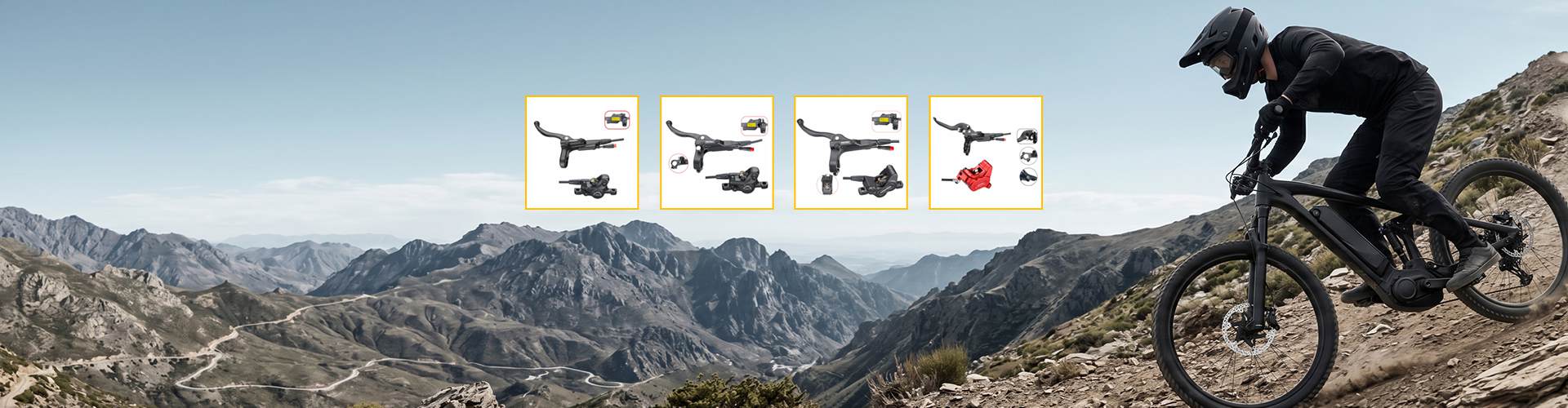


Bicycle braking system is a very important part of the bicycle, its important degree is no less than the bicycle frame. Because the braking system affects not only the performance of the bike, but also the safety of the rider. Bicycle disc brake brake system is mainly divided into two kinds, one is mechanical disc brake, the other is hydraulic disc brake. At present, more car users use when the hydraulic disc brake, mechanical also have a small number of car users in use. So, what's the difference between a mechanical disc brake hydraulic disc brake?
Mechanical disc brake
Mechanical disc brake is also known as line brake, mechanical disc brake is often seen in the entry level of the bicycle. Because for hydraulic disc brake, the price of mechanical disc brake is also much cheaper. The working principle of mechanical disc brake is that it can give the brake to pull the steel wire, promote the internal unilateral bilateral to make the piece, is to make the piece the brake disc friction, thereby producing braking force. Mechanical disc brake braking force, for daily use, is basically enough. But for many heavy bikes, that's not enough. The braking force of mechanical disc brake is also good, but also can reach the critical point of death. However, for many everyday rides uses, it is sufficient. Mechanical disc brake maintenance is also very convenient, especially in long distance riding, many riding friends will choose mechanical disc brake.
Hydraulic disc brake
Oil pressure disc brake is also called oil disc brake, mainly through the brake to push the brake oil inside the oil can, this time the brake oil at the same time to promote the piston caliper. The brake pad brake pad friction, resulting in braking force. Hydraulic disc brakes are available in both entry-level bikes professional bikes. Mainly because of the distinct reasons, the entry level also has the entry level oil pressure brake, professional level also has the professional level oil pressure brake. Oil pressure brake for mechanical disc brake, whether performance its own heat dissipation capacity, is much better than machinery. Hydraulic disc brake in the braking force, can be to meet a lot of riding. For example, it is a downhill race a lot of cross-ry cycling, but the oil pressure disc brake maintenance is also more troublesome. Oil pressure disc brake in the price, the entry of the oil pressure disc brake is more expensive than the entry of the mechanical disc brake. In the hand is also oil pressure disc brake much better, very smooth that kind. Car friends in the choice of disc brake, according to their actual situation to choose, choose the most suitable for their own.